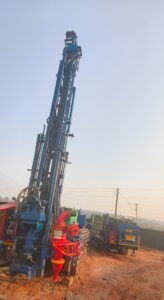
Reverse Circulation (RC) Drilling Services
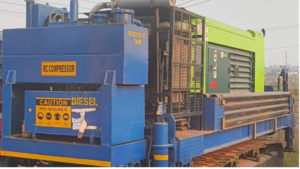
RC Drilling: What It Is and How It Works
Reverse Circulation (RC) drilling stands as a prominent technique in mineral exploration and geotechnical investigations. This method employs a dual-walled drill pipe system where compressed air is forced down the outer tube. The air then lifts the pulverized rock cuttings through the inner tube to the surface, providing rapid and relatively uncontaminated samples for immediate analysis.
This blog post will delve into the intricacies of RC drilling, exploring its operational mechanics step by step. We will unravel how the downhole hammer pulverizes the rock, how the compressed air efficiently transports the cuttings, and the crucial role of the sampling system in ensuring representative samples. Join us to gain a comprehensive understanding of this vital drilling technique.
What is RC Drilling?
RC drilling, or reverse circulation drilling, is a method of percussion drilling that utilizes compressed air to forcefully eject rock cuttings from the drill hole. This technique employs dual-walled drill rods where compressed air is pushed down the outer tube, and the pulverized rock samples are forced back up through the inner tube to be collected at the surface.
RC drilling is favored in mineral exploration for its speed, cost-effectiveness, and ability to provide relatively dry, uncontaminated samples quickly for analysis.
What is RC Drilling in Mining?
Reverse Circulation (RC) drilling in mining is a rapid and cost-effective method primarily used for mineral exploration and early-stage resource definition. It utilizes a dual-walled drill pipe system and compressed air to extract rock samples. This method is highly valued for its ability to deliver relatively uncontaminated samples quickly, making it ideal for determining the presence and approximate grade of mineralization over large areas.
Here’s how it generally works:
- Dual-Walled Drill Rods: RC drilling employs specialized drill rods with an inner tube and an outer tube. Compressed air is forced down the annulus (the space between the inner and outer tubes).
- Downhole Hammer and Bit: At the bottom of the drill string, a pneumatic (air-driven) downhole hammer rapidly impacts a tungsten-carbide-tipped drill bit. This pulverizes the rock at the bottom of the borehole.
- Reverse Circulation of Cuttings: The high-pressure air, along with the rock cuttings (chips), is then forced up through the inner tube of the drill rods. This “reverse circulation” prevents contamination from the borehole walls.
- Sample Collection: Once the air and cuttings reach the surface, they are directed into a cyclone separator. The cyclone slows the air flow, causing the rock chips to drop into sample bags, which are collected at regular intervals (e.g., every meter).
- Real-time Analysis: The collected rock chips provide a continuous, representative sample of the geology being drilled, allowing geologists to assess the mineral content in real-time, guiding further exploration decisions.

How RC Drilling Works
RC drilling operates using a dual-walled drill rod system. Compressed air is forced down the outer tube, powering a downhole hammer that pulverizes the rock. The resulting rock cuttings are then pushed upwards through the inner tube by the returning high-pressure air.
At the surface, a cyclone separator collects these samples for analysis while the air is expelled. This method allows for rapid drilling and the collection of relatively dry and uncontaminated samples.
Key aspects of how RC drilling works include:
- Dual-walled drill rods: An outer tube for compressed air and an inner tube for sample return.
- Downhole hammer: A pneumatic piston that rapidly impacts the drill bit to break rock.
- Compressed air: Used to power the hammer and transport cuttings to the surface.
- Drill bit: Typically features tungsten carbide buttons for effective rock penetration.
- Cyclone separator: A device at the surface that separates rock cuttings from the air stream for collection.
Reverse Circulation (RC) – RC drilling is the most popular method undertaken by our customers and is typically drilled to depths of up to 400 metres.
RC drilling produces a hole size Ø 140mm and is generally faster than diamond core drilling and generally produces better samples than rotary air blast (RAB) drilling. Reverse Circulation (RC) is more expensive than RAB and Air-core drilling but less expensive than Core (DD) drilling.
Reverse Circulation (RC) drilling produces rock chips rather than a Core sample. The RC method produces sample from depth by pulverizing rock with compressed air and a percussive hammer and returns it to surface through an inner tube and collects it through a cyclone then into a sample bag.
Reverse Circulation (RC) is often used in conjunction with a multi-purpose rig to drill RC pre-collars with Core tails. This method is used extensively for exploration and resource drilling.